

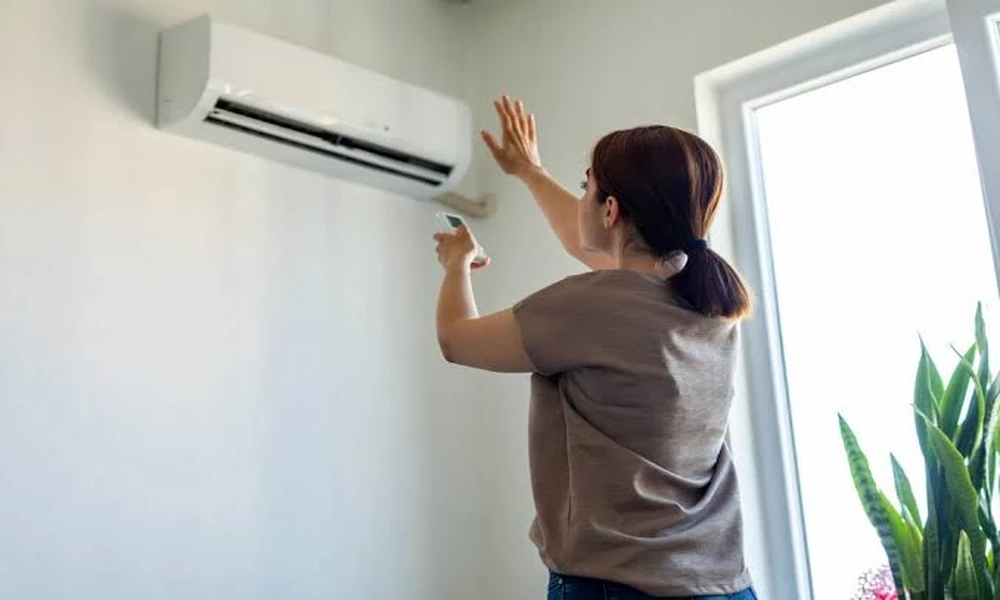
An air conditioner that has gradually stopped cooling well is almost always suffering from restricted airflow or a maintenance deficit, not a failed component. Units that stop cooling suddenly are a different case and usually point to refrigerant or electrical issues.
This guide covers the checks worth running first and the point at which a qualified engineer is needed.
Filter cleaning methods and permitted procedures vary by unit, and the Mitsubishi air conditioner manuals state what is allowed on each one.
Start with the obvious settings
A surprising share of complaints resolve here:
Confirm the unit is in cooling mode, not fan, dry or auto. Fan mode moves air without cooling it, and people set it accidentally.
Check the set temperature is actually below room temperature.
Check whether an eco or quiet mode is limiting compressor output.
Check the timer is not switching the unit off.
Replace the remote batteries – a weak remote sends partial commands and produces baffling behaviour.
Filters: the single biggest factor
Indoor unit filters clog with dust and pet hair, and the effect is gradual, so people do not notice until performance is visibly poor.
Open the indoor unit front panel and slide out the filters.
Vacuum them, then wash in lukewarm water if the documentation permits.
Dry completely before refitting – a damp filter grows mould and produces the characteristic musty smell.
Clean every few weeks in heavy use, at minimum every couple of months.
A clogged filter reduces airflow, which reduces cooling, increases running cost and eventually causes the indoor coil to ice up.
Icing on the indoor coil
Ice forming on the indoor unit is a symptom with a short list of causes:
Restricted airflow from dirty filters or a blocked return.
Fan speed set too low for the conditions.
Low refrigerant charge, usually indicating a leak.
Running in cooling mode when the outdoor temperature is too low for the unit’s rated range.
The first two are user-fixable. Switch the unit to fan-only to melt the ice before investigating, and never chip at it.
The outdoor unit
Check the condenser coil fins are clear of leaves, dust and debris. Rinse gently with a hose from the inside outward where accessible, with power off.
Check clearance around the unit. Fencing, shrubs or stored items restrict airflow.
Check the fan spins freely and the unit is not obstructed.
Avoid bending the fins – they are soft aluminium and damage easily.
A condenser that cannot reject heat produces exactly the same symptom as a fault: weak cooling and long run times.
Drainage and leaking
Water dripping from the indoor unit usually means the condensate drain is blocked. The drain line runs from the indoor unit to outside and blocks with algae and dust.
Check the outdoor end of the drain for a steady drip during operation.
Check the line is not kinked or lifted along its run.
A blocked drain causes the tray to overflow, which most units detect and respond to by stopping.
Sizing and expectations
A unit that has always struggled on hot days may simply be undersized for the space, or fighting heat gain from unshaded glazing. Closing blinds during the hottest part of the day makes a measurable difference and costs nothing.
Equally, running a unit at an extremely low set temperature does not cool a room faster – it runs the compressor longer at the same output and overshoots.
Error codes on split systems are manufacturer-specific, so manuals for most makes and models are the fastest route to what a given code means.
When to call an engineer
Suspected refrigerant loss. Topping up refrigerant without finding the leak is not a repair, and handling refrigerant is regulated work.
Repeated icing with clean filters and good airflow.
Any electrical fault, tripping breaker or burning smell.
Unusual noise from the compressor.
Error codes pointing to sensors or the control board.
Provide the model number, the error code if shown, and what you have already checked. That shortens diagnosis considerably.
Frequently asked questions
Should I leave it running all day or switch it on and off?
For an inverter unit, leaving it running at a steady temperature is usually more efficient than repeated large cycles, since the compressor modulates.
Why does it smell musty?
Almost always moisture in the indoor unit – filters, coil or drain tray. Running fan-only for a period after cooling helps dry the coil.
How often does it need servicing?
Annual professional servicing is typical, with user filter cleaning far more frequently.
Note: isolate power before cleaning any part of an air conditioning system. Refrigerant work is regulated and must be carried out by a qualified engineer. Cleaning procedures differ by model.