

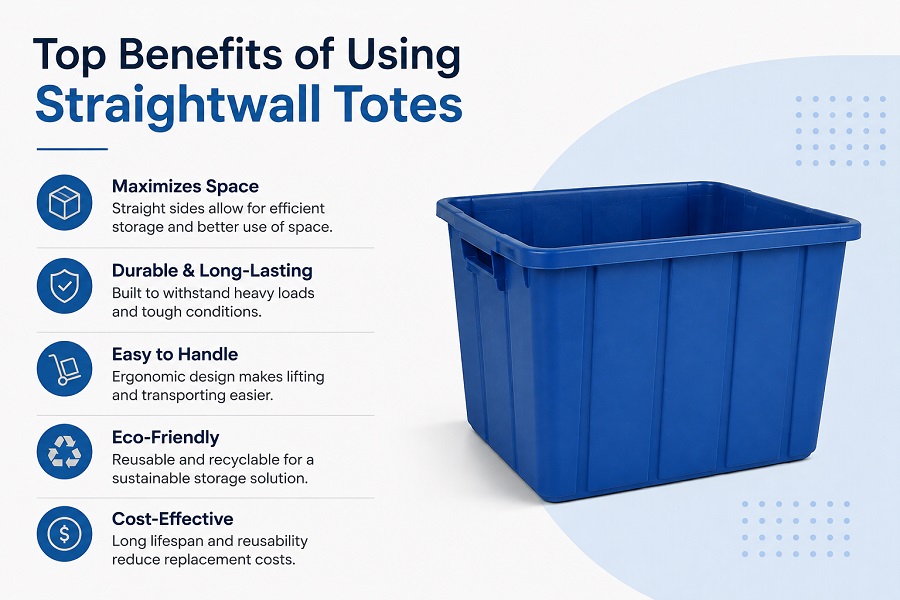
Space disappears quickly inside a busy warehouse each day. Shelves fill up, parts get mixed, and cardboard boxes break.
A straightwall tote gives your team a better storage option. Its upright sides provide more usable room inside each container.
These containers also support stacking and repeated handling. You can use them for picking, sorting, storage, or transportation.
More Usable Space Inside Each Container
Sloped containers lose room near the bottom and corners. Straight interior walls use the full width from top to base.
Your workers can place square packages against each side. Parts also fit into rows without leaving large empty gaps. This design helps when your products have fixed dimensions. Electronics, hardware, medical supplies, and small components benefit from better spacing.
More internal rooms can reduce the number of containers required. Your team may complete the same task with fewer trips.
Better Stacking Across Your Facility
Warehouse teams need containers that stack without tipping. A straightwall tote commonly includes reinforced edges for stable placement.
Stacking helps you use vertical space more effectively. Floor areas can remain available for workers and equipment. Stable stacks also support smoother transportation between departments. Your staff can prepare grouped orders before the next process begins.
Always follow the manufacturer’s recommended stacking limits. Excess weight may damage containers or affect worker safety.
Improved Protection for Stored Products
Cardboards can bend after repeated use or moisture exposure. Molded containers provide better support around stored products.
External ribs can help protect the walls from impact. This feature is useful during conveyor use or truck transportation. Smooth interior surfaces can reduce contact damage as well. Finished parts are less likely to scrape against rough cardboard edges.
Custom dividers provide another layer of product protection. Your team can separate items that should never touch.
Easier Picking and Sorting
Workers lose valuable time when products are poorly organized. Consistent container sizes can simplify picking routes and storage locations.
You can assign one container size to each product group. Staff members then know where each item belongs. Color choices may also support faster visual sorting. One color can identify returns while another marks completed orders.
Clear labels provide more specific tracking information. Barcodes or RFID tags can connect physical inventory with your warehouse system.
Lower Packaging Waste
Single-use boxes require regular replacement across daily operations. Reusable containers can serve your business through many cycles. Your team spends less time building and taping boxes. Workers can also avoid breaking down cardboard after every delivery.
Reduced packaging use may lower disposal costs over time. The financial benefit depends on trip volume and container lifespan.
Track replacement rates before judging your actual savings. A durable program needs proper handling and scheduled inspections.
Simple Cleaning and Maintenance
Warehouse containers collect dust and product residue during use. Smooth surfaces make routine cleaning less difficult for your team.
Some models include drain holes for faster washing. Water can leave the container without manual tipping afterward. Create a cleaning schedule based on product type. Food or pharmaceutical operations may need stricter procedures than hardware storage.
Inspect every tote during the cleaning process. Cracks or damaged rims should be removed from service promptly.
Useful for Many Warehouse Tasks
One container design can support several daily processes. Your team can use it for storage today and shipping tomorrow.
Common applications include:
- Moving components between manufacturing workstations
- Organizing inventory inside warehouse shelving
- Preparing items for order fulfillment
- Separating returned products for inspection
- Transporting supplies between company locations
- Holding parts beside assembly lines
Using fewer container styles can simplify purchasing decisions. Your workers also spend less time learning different handling methods.
Better Support for Automation
Modern warehouses rely on conveyors and scanning equipment. Containers with consistent dimensions work better inside these systems.
Uniform walls can reduce jams during conveyor transportation. Flat identification areas also support barcode label placement. Before ordering containers, measure your existing equipment carefully. Check conveyor width and shelf depth before selecting dimensions.
Small measurement errors can cause expensive workflow problems. A sample test should happen before a large order.
Long-Term Value for Your Operation
The lowest container price does not always save money. Replacement frequency and labor time affect your final cost.
A quality tote can support repeated trips without immediate replacement. Your business may also reduce cardboard purchases each month. Calculate value using your actual operating conditions. Include cleaning costs and damaged-product rates within your comparison.
Straightwall containers work best when size matches the task. Choose dimensions based on your products and available storage space. Your final choice should improve space use and handling. The right container can make daily warehouse work much easier.